
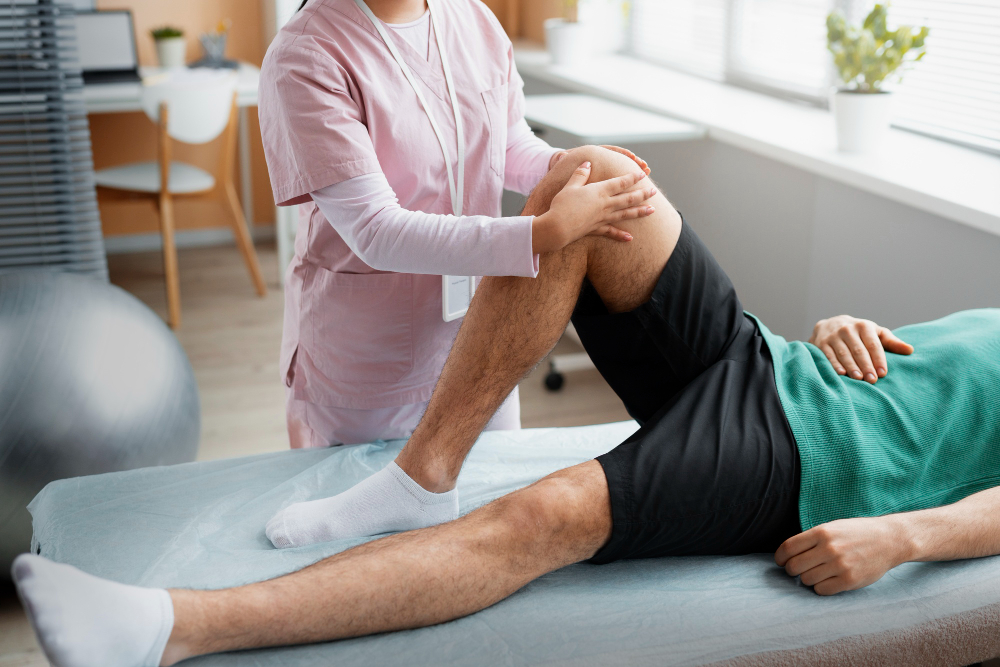
What Is Knee Pain Physiotherapy?
Knee pain physiotherapy is a treatment that helps people manage and reduce knee pain. It uses movement, exercises, and hands-on care to improve knee function. Often, physiotherapists teach safe ways to move and strengthen the knee. As a result, many people can return to daily activities with less pain. Knee pain physiotherapy is helpful for both sudden injuries and long-term knee problems.
Common Symptoms of Knee Pain
Knee pain can show up in many ways. For example, you might feel pain when walking or climbing stairs. Sometimes, the knee may swell or feel stiff. In other cases, you may notice:
Because symptoms can vary, it is important to pay attention to any changes in your knee.
Causes of Knee Pain Requiring Physiotherapy
Many things can cause knee pain that needs physiotherapy. For instance, injuries from sports or falls are common. However, long-term wear and tear can also lead to pain. Some main causes include:
Because each cause may need a different approach, a proper diagnosis is important.
How Knee Pain Is Diagnosed
First, a physiotherapist or doctor will ask about your symptoms and medical history. Next, they will check your knee by looking at how you move and testing your strength. Sometimes, they may suggest an X-ray or MRI to see inside the knee. These tests help find the exact problem. According to the CDC, early diagnosis can lead to better results and faster recovery.
Effective Physiotherapy Treatments for Knee Pain
Physiotherapy offers many ways to treat knee pain. For example, your physiotherapist may use:
In addition, rehabilitation for knee injuries often includes a step-by-step exercise plan. This helps you regain strength and return to normal activities. The World Health Organization supports exercise-based therapy for joint pain and injury recovery.
Sample Physiotherapy Exercises for Knee Pain
Always follow your physiotherapist’s advice before starting new exercises.
Home Care and Lifestyle Tips
Along with physiotherapy, home care can help manage knee pain. For example, you can:
Because small changes can make a big difference, try to stay active with safe activities like walking or swimming.
Prevention Strategies for Knee Pain
Preventing knee pain is possible with a few simple steps. For instance, you can:
Because prevention is easier than treatment, these habits can help keep your knees healthy.
When to See a Physiotherapist
Sometimes, home care is not enough. You should see a physiotherapist if:
Early treatment can prevent further damage and speed up recovery. Therefore, do not wait too long to seek help.
Consult a qualified physiotherapist for personalized knee pain management and guidance.