Rehabilitation before and after surgery
Surgery is often only part of the journey. What you do before and after it matters too. Post-surgical rehabilitation is a particular strength of our team at The Sports Doc. We work alongside your surgeon’s instructions to help you regain movement, strength and confidence, step by step.
Surgeries we commonly rehabilitate
-
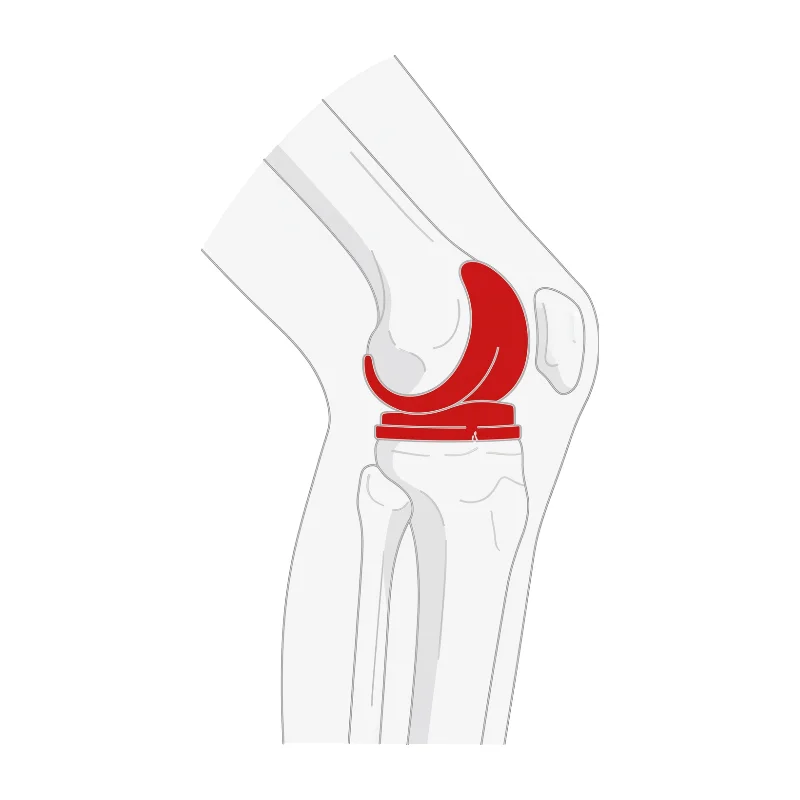
Joint replacement
Knee, hip and shoulder replacement.
-
Ligament reconstruction
Including ACL reconstruction and ankle ligament reconstruction.
-
Arthroscopic (keyhole) surgery
Including meniscus surgery, hip arthroscopy and shoulder arthroscopy.
-
Tendon repair
Including rotator cuff repair and Achilles tendon repair.
-
Shoulder stabilisation
After a dislocation.
-
Fracture fixation
After a broken bone has been fixed with plates, screws or nails.
-
Spinal surgery
Including disc surgery and spinal fusion.
Rehabilitation before surgery (“prehab”)
If you’re waiting for an operation, starting physiotherapy beforehand can help. Prehabilitation aims to reduce pain and swelling, keep you moving, and build strength before surgery. It also helps you understand what to expect afterwards and practise the early exercises you’ll need.
If your operation isn’t listed, call or WhatsApp us and we’ll tell you whether we can help.
How we work with you and your surgeon
Your first visit isn’t run to a fixed clock. We take the time to understand your operation, your recovery so far and your goals.
-
Your operation and instructions
Please bring your discharge summary, operation notes and any protocol or restrictions from your surgeon. We follow them carefully.
-
Assessment
We check your wound, swelling, movement, strength and walking, and how you’re managing at home.
-
A clear plan
We explain each stage of your rehabilitation, what you can and can’t do yet, and how we’ll measure progress.
-
Staying in touch
If anything doesn’t look right, we’ll advise you to contact your surgeon, and we’ll share progress with them where helpful.
We work within your surgeon’s instructions at every stage.
How we treat you
Comes first
Exercise therapy
A carefully progressed exercise programme, prescribed by your physiotherapist and matched to your surgeon’s instructions, is at the centre of rehabilitation after surgery. It aims to restore movement, rebuild strength and help you return to daily life and sport.
Depending on your assessment, we may add
- Blood flow restriction (BFR) training: strengthening with lighter weights, which can be particularly useful after surgery, when heavy loads aren’t yet safe
- Manual therapy, including Mulligan mobilisations: gentle hands-on techniques to ease pain and help restore movement, when your surgeon’s restrictions allow
- Swelling and scar management: advice and techniques to help manage swelling and keep the scar area moving
- Taping or bracing advice: to support the area as it recovers, alongside any brace your surgeon has prescribed
- High-intensity laser therapy, used alongside exercise
- Walking, balance and confidence training: to help you move safely, including on stairs
- Return-to-sport testing and training in our Performance Lab, when you’re ready
Not every treatment suits everyone or every operation. Your physiotherapist will explain what they recommend and why.
Typical recovery phases
Every operation and every person is different. These phases are a general guide, not a timetable. We follow your surgeon’s instructions and move you on when you meet the goals for each phase, not by the calendar.
-
Phase 1
Protect
Care for the operated area, manage pain and swelling, and start safe early movement.
-
Phase 2
Restore
Regain movement, normal walking or arm use, and everyday independence.
-
Phase 3
Strengthen
Rebuild strength, balance and control, progressed step by step.
-
Phase 4
Return
Work-, sport- and activity-specific training, with testing to guide your return to full activity.
Recovery after surgery takes time, and it varies a great deal between operations and between people. Your physiotherapist and surgeon will talk you through what to expect for your situation.
When to see a doctor urgently
Some problems after surgery need medical attention, not physiotherapy. Seek urgent medical care: reach out to the nearest hospital or connect with your treating surgeon if:
- Your wound becomes red, hot, swollen, leaks fluid or pus, or smells, or the wound opens
- You have a fever, chills, or feel very unwell
- You have calf pain, swelling or warmth (a possible sign of a blood clot)
- You have sudden breathlessness, chest pain or cough up blood (a possible clot in the lungs; seek emergency care immediately)
- You have sudden severe pain, a new deformity, or your joint suddenly gives way or looks out of place
- You develop new numbness, weakness, or a hand or foot that is pale or cold
- After spinal surgery, you have difficulty passing urine, loss of bladder or bowel control, or numbness around your back passage or genitals
If you’re unsure whether something is normal after your operation, contact your surgeon’s team.
Who will treat you
Post-surgical rehabilitation is led by our team of qualified physiotherapists.
Questions about rehabilitation after surgery
Can’t find your answer? Ask us on WhatsApp
When should I start physiotherapy after my operation?
That depends on your operation and your surgeon’s instructions. For many operations, rehabilitation starts within days. Please contact us as soon as you have your discharge plan.
Will you follow my surgeon’s protocol?
Yes. We follow your surgeon’s instructions and restrictions, and we’ll contact your surgeon’s team if anything needs checking.
Should I do physiotherapy before my surgery?
Often, yes. Rehabilitation before surgery (prehab) aims to reduce pain, keep you moving and build strength before your operation. Research suggests it can help, particularly before knee replacement. Your surgeon and physiotherapist will advise what’s right for you.
How long will my rehabilitation take?
It varies a great deal between operations and between people, so we don’t set a date in advance. We move you on as you meet the goals for each stage, and we’ll keep you updated on your progress.
What should I bring to my first session?
Your discharge summary, operation notes, any surgeon’s protocol or restrictions, a list of your medicines, and comfortable clothes that let us see and move the operated area. Bring any brace or sling you’ve been given.
Book your post-surgery rehabilitation
Call, WhatsApp or book on Practo. Visit us at The Sports Doc Worli (Midas), or at our members-only branch at NSCI Worli.