
Manual therapy and Mulligan mobilisations
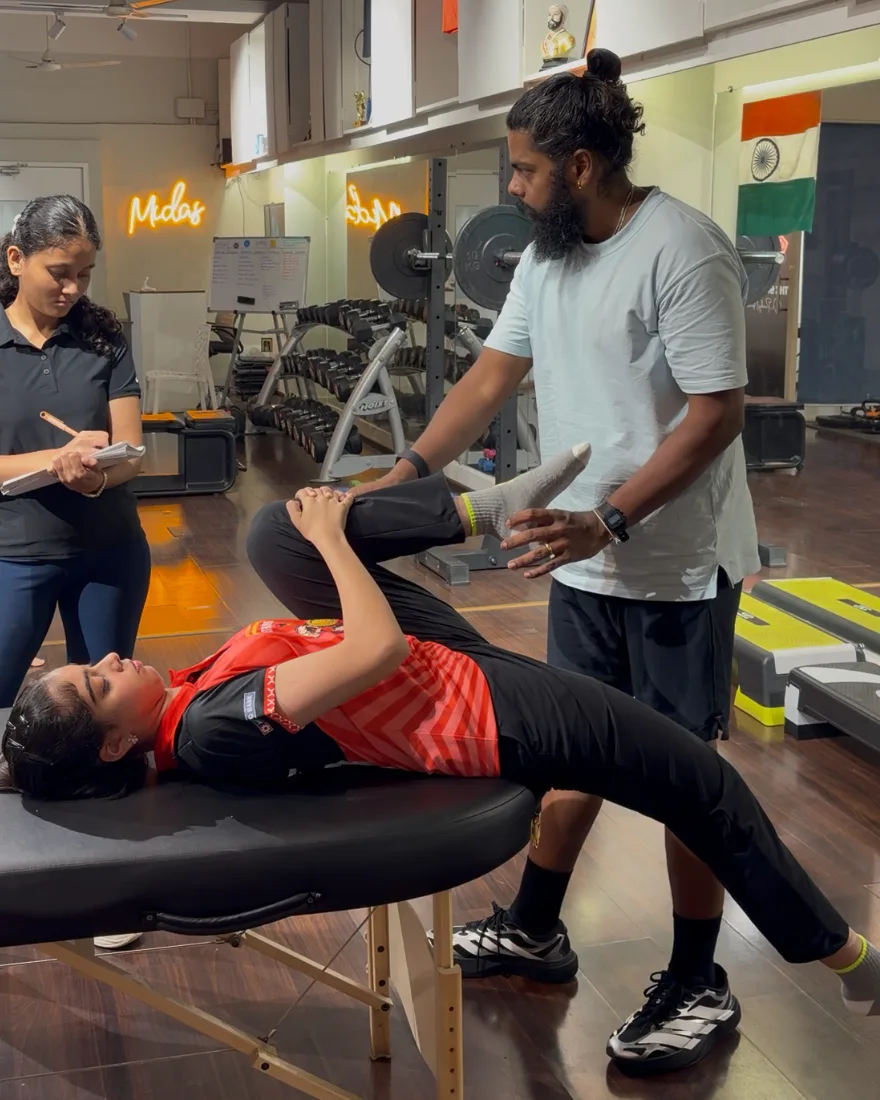
Manual therapy means hands-on treatment by your physiotherapist, including joint mobilisation, soft-tissue work and Mulligan mobilisations.
In a Mulligan mobilisation, your physiotherapist applies a gentle, sustained glide to a joint while you move it, and it should be pain-free. For the spine, these are sometimes called SNAGs.
Who it may help
- People with stiff or painful joints, muscles and spine
- Neck, back, shoulder, elbow, hip, knee and ankle problems
- As one part of a plan built around exercise
What a session involves
-
Your physiotherapist uses their hands to move a joint or work on soft tissue, checking how it feels as they go.
-
In a Mulligan mobilisation, you repeat a movement while your physiotherapist holds the glide. It should feel easier and less painful.
-
Hands-on treatment is usually followed by exercise, to make the most of any improvement in movement.
Evidence
What the research says
Guidelines support manual therapy combined with exercise for several problems, including neck pain, low back pain, heel pain, hip arthritis and rotator cuff–related shoulder pain, mainly for short-term relief.
Research on Mulligan mobilisations is strongest for tennis elbow, and studies also support them for ankle sprains, stiff shoulders, and some neck-related headaches and dizziness, although many studies are small.
Safety
Manual therapy is generally very safe. You may feel mild soreness for a day afterwards. Your physiotherapist checks for conditions where some techniques aren’t suitable, such as a recent fracture or severe osteoporosis, and screens carefully before any neck treatment.
Conditions it’s used for
Book an assessment
You don’t need to choose a treatment yourself. Your physiotherapist will assess you and recommend a plan. Call, WhatsApp or book on Practo. Visit us at The Sports Doc Worli (Midas), or at our members-only branch at NSCI Worli.