
Knee pain and ACL rehabilitation
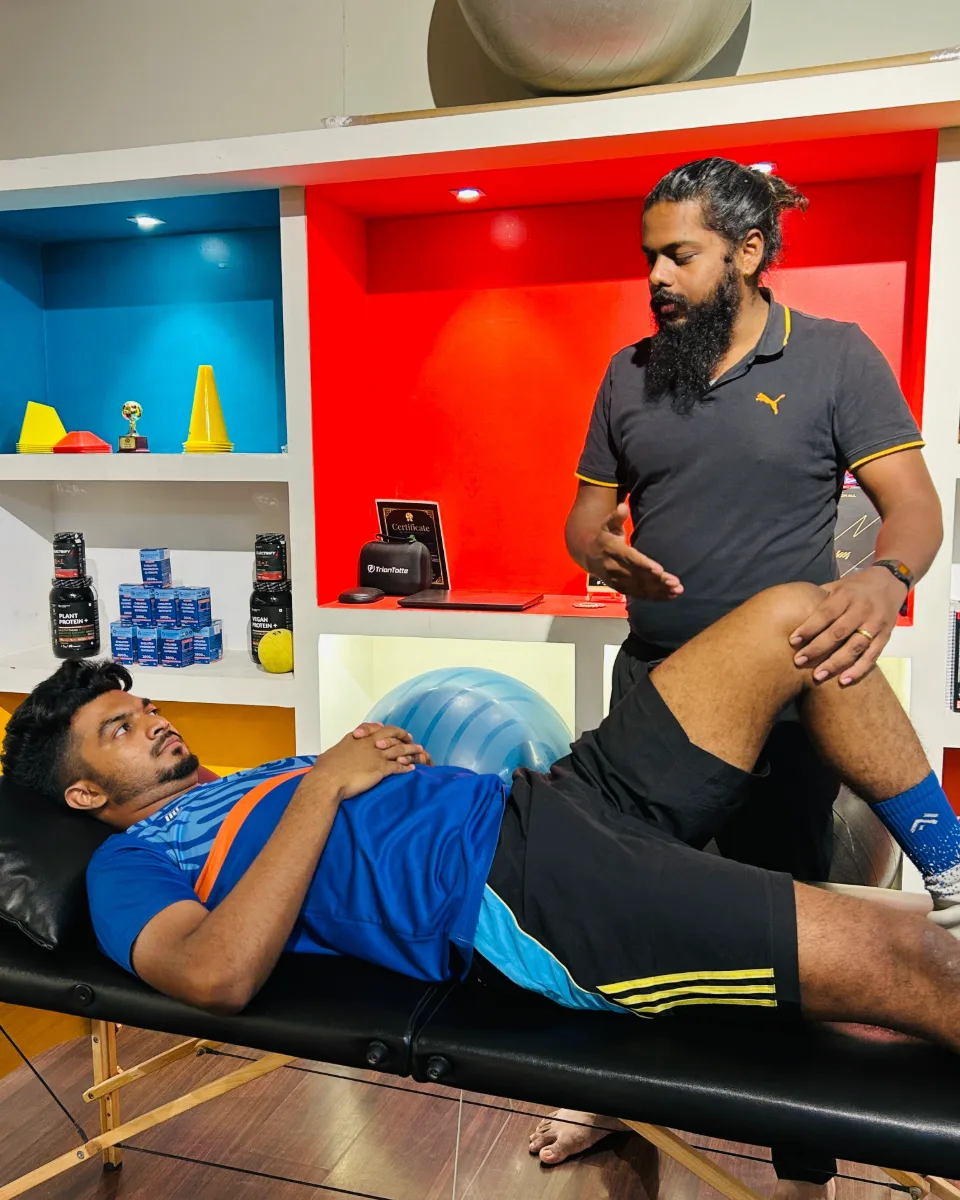
Whether you’ve twisted your knee playing sport, have pain that has built up over time, or are preparing for or recovering from knee surgery, a physiotherapist at The Sports Doc assesses your knee in detail, explains what we find, and builds a plan around exercise therapy.
Knee injuries we commonly see or treat
-
ACL injuries
A tear of the anterior cruciate ligament, often from a twist, sudden change of direction or awkward landing. Includes rehabilitation before and after ACL reconstruction.
-
Meniscus injuries
Damage to the cartilage “shock absorbers” inside the knee.
-
Other ligament sprains
Such as the MCL, on the inner side of the knee.
-
Pain at the front of the knee
Patellofemoral pain, often worse on stairs, when squatting or after sitting for a long time.
-
Patellar tendon pain
“Jumper’s knee”: pain just below the kneecap, common in jumping and running sports.
-
Knee osteoarthritis
Stiffness and aching that often builds up gradually.
-
Recovery after knee surgery
Including knee replacement, ligament reconstruction and meniscus surgery. Post-surgical rehabilitation is a particular strength of our team.
Symptoms you might notice
- Pain when walking, running, climbing stairs, squatting or kneeling
- Swelling, or a knee that feels puffy or tight
- Your knee “giving way” or feeling unstable, especially when turning
- Clicking, catching, or a feeling that something is getting stuck
- Stiffness, or difficulty fully bending or straightening your knee
- Weakness in your thigh, or not trusting your knee during sport
These symptoms can have many causes. A proper assessment helps work out what’s going on.
How we assess your knee
Your first visit isn’t run to a fixed clock. We take the time to understand you and your knee.
-
Your story
How the problem started, what makes it better or worse, your sport or daily activities, and what you want to get back to.
-
Movement and strength testing
How your knee bends, straightens and takes load, and how well your hip and ankle support it.
-
Specific knee tests
Gentle hands-on checks of the ligaments, meniscus and kneecap.
-
Your reports
We look at any scans or surgical notes you bring.
-
A clear explanation and a written plan
What we think is happening, what we’ll work on, and how we’ll measure progress.
If we think you need a scan or a doctor’s opinion, we’ll tell you and explain the next steps.
How we treat it
Comes first
Exercise therapy
A personalised exercise programme, prescribed and progressed by your physiotherapist, is at the centre of knee rehabilitation. It builds strength, control and confidence in your knee.
Depending on your assessment, we may add
- Mulligan mobilisations: a hands-on technique in which your physiotherapist applies a gentle, sustained glide to the joint while you move your knee. Used alongside exercise, it may help ease pain and improve movement
- Other manual therapy: hands-on techniques to ease pain and improve movement
- Blood flow restriction (BFR) training: strengthening with lighter weights, useful when your knee can’t yet tolerate heavy loads
- Shockwave therapy: sometimes used for long-standing tendon pain around the knee
- High-intensity laser therapy, used alongside exercise
- Dry needling for tight, painful muscles
- Return-to-sport testing and training in our Performance Lab
Not every treatment suits everyone. Your physiotherapist will explain what they recommend and why.
Typical recovery phases
Every knee is different. These phases are a general guide, not a timetable. We move you on when you meet the goals for each phase, not by the calendar.
-
Phase 1
Settle
Calm pain and swelling, restore movement, and start activating your thigh muscles.
-
Phase 2
Strengthen
Build strength and control in your knee, hip and ankle, with exercise progressed step by step.
-
Phase 3
Build up
Return to running, jumping, changing direction and sport-specific movements, as appropriate.
-
Phase 4
Return
Objective testing of strength, hopping and movement quality to guide your return to sport or full activity.
For ACL injuries in particular, rehabilitation is usually measured in months rather than weeks. Your physiotherapist will talk you through what to expect for your situation.
When to see a doctor urgently
Physiotherapy isn’t the right first step for some knee problems. Seek urgent medical care: reach out to the nearest hospital or connect with your treating surgeon if:
- You can’t put any weight on your leg after an injury
- Your knee looks deformed, or you suspect a broken bone
- Your knee is locked and you can’t straighten it
- Your knee becomes hot, red and swollen, especially with a fever or feeling unwell (a possible sign of infection)
- You have calf pain, swelling or warmth, especially after surgery or a long period of not moving (a possible sign of a blood clot)
- Your foot or lower leg becomes numb, pale or cold
- After surgery, your wound becomes red, hot, leaks fluid or smells
Large swelling within a few hours of a twisting injury should also be checked promptly, as it can be a sign of a significant ligament injury.
Who will treat you
Knee and ACL rehabilitation is led by our team of qualified physiotherapists.
Knee questions
Can’t find your answer? Ask us on WhatsApp
Do I need a scan before I see you?
No. Many knee problems can be assessed without a scan. If we think you need one, we’ll explain why and what the next steps are.
Should I have surgery for my ACL tear?
That depends on your knee, your sport and your goals, and it’s a decision to make with an orthopaedic surgeon. We can assess you, explain the options and work with your surgeon, whichever route you choose.
Can I start physiotherapy before ACL surgery?
Often, yes. Rehabilitation before surgery (sometimes called “prehab”) aims to reduce swelling, restore movement and build strength before your operation. Your surgeon and physiotherapist will advise what’s right for you.
When can I return to sport?
We don’t set a date in advance. We use objective strength, movement and hop tests, alongside how your knee feels, to guide the decision with you and, where relevant, your surgeon and coach.
Do I need a doctor’s referral?
No. You can book directly with us. Please bring any reports, scans or surgical notes you have.
Book a knee assessment
Call, WhatsApp or book on Practo. Visit us at The Sports Doc Worli (Midas), or at our members-only branch at NSCI Worli.