Dry needling
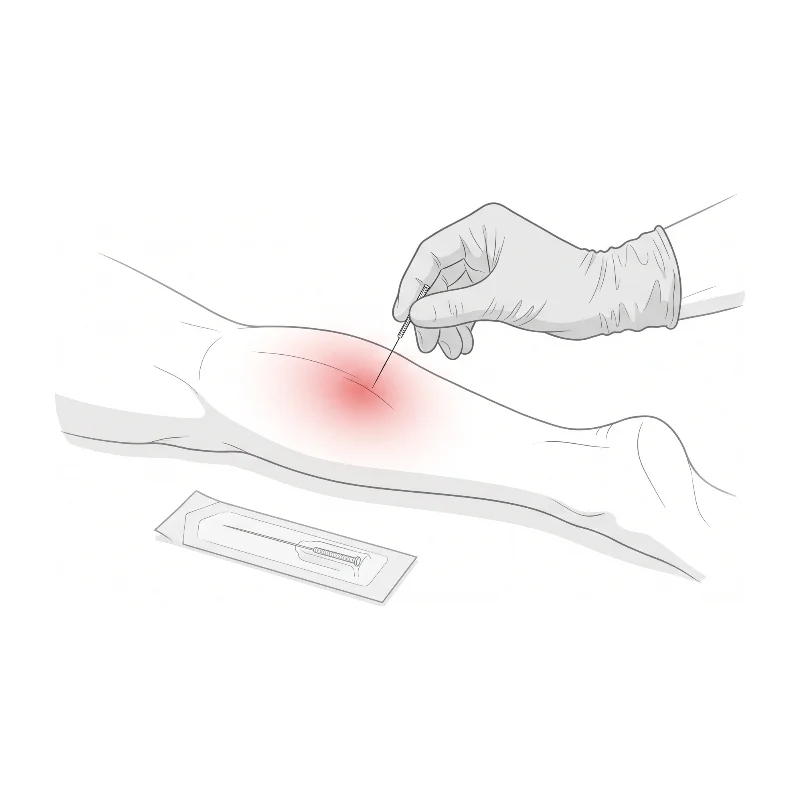
Dry needling uses fine, sterile, single-use needles placed into tight or painful areas of muscle. “Dry” means nothing is injected.
It’s one part of a treatment plan, used alongside exercise.
Who it may help
- People with tight, painful muscles, for example in the neck, shoulders, back, calves, buttock or forearm
- Some people with heel pain
What a session involves
-
Your physiotherapist explains the treatment and asks for your consent first.
-
A fine needle is placed into the muscle. You may feel a brief twitch or ache, which settles quickly.
-
Needles are usually in place for a short time, then removed and safely disposed of.
-
Exercise usually follows.
Evidence
What the research says
Guidelines include dry needling as an option for some problems, such as heel pain and neck pain, usually alongside exercise.
Results vary between people, which is why we use it as part of a wider plan.
Safety
Mild soreness or bruising for a day or two is common. Serious problems are rare. Over the chest wall, there is a very small risk of a needle affecting the lung, so your physiotherapist takes particular care in these areas. Tell your physiotherapist if you take blood-thinning medicines, have a bleeding disorder, are pregnant, have a fear of needles, or have lymphoedema or an infection in the area.
Conditions it’s used for
Book an assessment
You don’t need to choose a treatment yourself. Your physiotherapist will assess you and recommend a plan. Call, WhatsApp or book on Practo. Visit us at The Sports Doc Worli (Midas), or at our members-only branch at NSCI Worli.